Engaging Students Through Historical Role Play


 RSS Feed
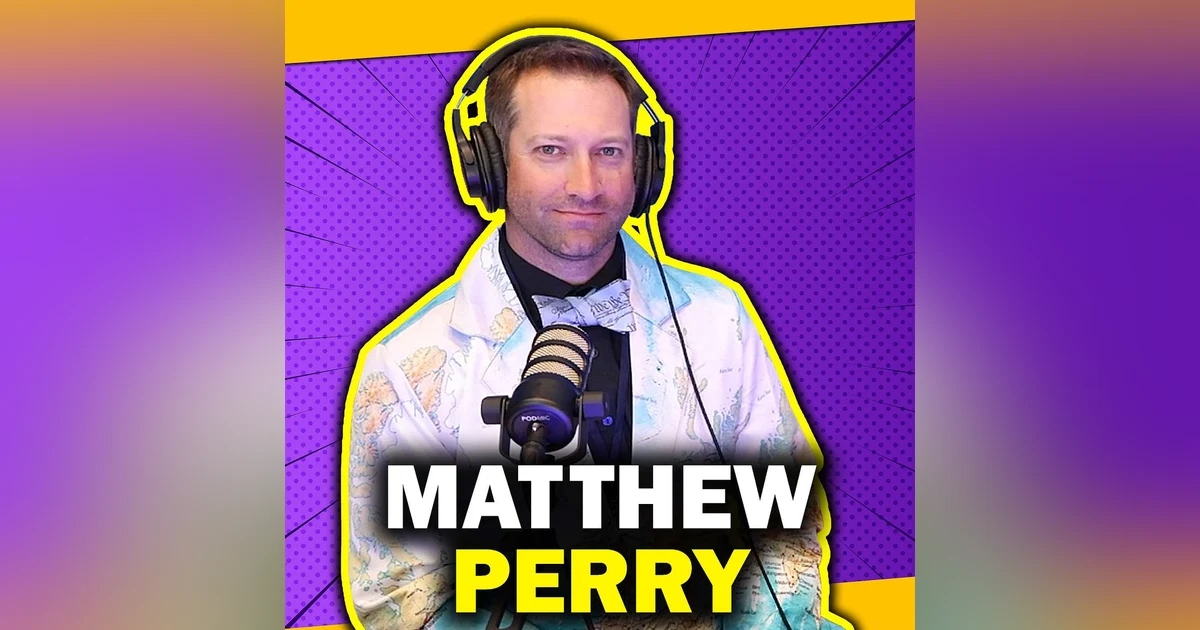
What happens when a history lesson leaps off the pages of a textbook and transforms into a gripping debate of independence? Matthew Perry, an educator at Davis Academy in Dunwoody, Georgia, knows the answer. On this episode of Spotlight for Success, our guest Matthew shares an inspiring journey that led him from the University of New Hampshire back to his Atlanta roots, where a chance encounter with a former teacher opened the door to his teaching career. With over two decades of experience, Matthew has not only written the curriculum for seventh and eighth grade social studies but has also inspired countless students by transforming traditional lessons into dynamic reenactments, like the Second Continental Congress.
0:02 This podcast Spotlight for Success, is our way of highlighting the incredible success stories happening in education right now in our home state of Georgia. Today we're thrilled to be joined by Matthew Perry, with Davis Academy in Dunwoody, Georgia. Yes sir. We'll explore his journey, insights and positive changes he's creating in the classroom, his 7th and 8th grade classroom at Davis Academy. Can you tell us a little bit about yourself, Matthew? Sure I'm going to say I'm a native Atlantan. I've been here since I was in early elementary school. I went to Riverwood High School, Then I went to the University of New Hampshire, ran track in college there and studied history, political science.
0:42 My language arts teacher in high school. I knew I was going to get an education and he guided me to that, and so I studied history and political science in New Hampshire and while I was there I came home on my winter break, my Thanksgiving break, spring breaks, and went to the school where my former language arts teacher then became principal and I moved back to Atlanta right after graduation. Been here since. That is wonderful. Can you tell us a little bit about how you got involved with Davis Academy? Sure I. I went to I'm Jewish myself and I went to just normal public schools growing up and I was probably your average teenage kid who was not really into the religious day school and Sunday school stuff like that.
1:24 And I really just kind of fell into it because my former language arts teacher became the principal. He said you know, if you want to, I'll give you a practice interview, knowing that you're going to try to become an educator and if you want to interview, no guarantees you're not going to get the job. But if you'd like to interview, you know, get a good practice session. And I really hadn't thought at all about being in a Jewish school. I had not thought about being in a private school. I just 21 years old and just did the interview. The other three or four teachers that did not. They did not accept the job offer and so then it went to me. I've been there ever since. Wow, 20 years. So that's a long time. And were you always teaching seventh and eighth grade social studies?
2:04 Yeah, I've always had 8th grade social studies, which is US history, government, economics, 7th grade. The school has fluctuated in terms of how large a school has been. So I taught 7th grade and 8th grade for my first few years and then that changed when the school got bigger. We need another teacher for 7th, so I just took 8th, and then, when the school decreased a little bit in size, I took seventh and eighth grade. So I wrote the seventh grade and eighth grade curriculum at the school now. That is wonderful and I understand. This academy is the largest Jewish school in the U. S Yes, we are the largest Jewish school, jewish day school in the United States K through eight, pre-k through eight, and we're a 31-year-old school now. Wow, yep, so one of the oldest schools too, wow.
2:46 That's great. So tell us a little bit about your journey in terms of in your teaching with 7th and 8th grade social studies. What are some moments or milestones that you're like? That was a wow moment in my career. I was just so excited when that happened. So when I started teaching I was given just a textbook, us history textbook. No lessons, no real guidance. And the social studies teacher before me said oh yeah, the kids like to dress up and do a reenactment of the signing of the Declaration of Independence. I said, okay. So then that I took that and kind of morphed it and now it's our big reenactment Second Continental Congress. All the kids are different delegates from the 13 colonies.
3:26 They are assigned a role. They do independent research on who they are, on their history, their colony. We then learn about the American Revolution and we meet in Independence Hall, which is the media center, and the kids are sitting at the 13 different colony tables green tablecloths, the fake candles, the lights are off like 1776. And we argue and discuss the issues that the founding fathers discussed and then they pretty much take it from there and they have to make the decision are we going to declare independence? Are we going to stay loyal to Britain? Are we going to fight in a war, how? And what's fun is that that moment has become the highlight of the eighth grade year. Yeah, they love it, they absolutely love it.
4:07 That's awesome, and so now you're here at GCSS, Matthew. So what are some takeaways you're hoping to get from the conference? This is probably the fifth, sixth, maybe even seventh time I've been to this conference and one of my favorite things is networking with everyone and just seeing everyone, meeting everyone and connecting with other people again, and seeing all the new resources that are available and seeing even the old resources, the older people or the people I've spoken to before, and connecting with them and saying, you know, wow, this is great. Y'all have this new project or this new product or you have this new part of your website. This is awesome. I'm going to use it in my classroom and I was actually just upstairs talking to this Center for Civil and Human Rights Museum and they're a part of my presentation.
4:50 And so when I explained to them that you know pictures of your museum and some of the artifacts are in my presentation. I mean we immediately connected and we take our children to the center and so it's kind of it's fun to engage with everyone and know that we're, even though social studies is such a worldly thing that at the same time we're still very connected at the local level. So, Matthew, what is your presentation about overall? So I'm doing a. I have to look up the name of it because I've been messing it up all day. It's called the Six Moderns: Human and Civil Rights Then and Now. The Gilded Age Today and Then. 21st Century China. Transboundary pollution, climate change and globalization Wow.
5:30 So I'm going to have about 20 to 25 different poster boards all over the room that are going to show different documents. I use images, graphics of those lessons and talk about how I try to use those lessons for what the content of the history is. But how is it still relevant today, how are we still a part of it and how does it affect our life every day? And there's a tiny human and civil rights element in all of them which is kind of like the beginning-ish foundation of the presentation. So as I go around and talk about the different topics, each one goes directly back to human and civil rights. Wow, that's amazing. So is there anything else you'd like to share with the audience about things that you're doing?
6:15 I take our seventh graders to Washington DC, Jamestown, Williamsburg, Washington DC the Center for Civil and Human Rights. We take them to the Atlanta History Center Any opportunity you can to check out what's local in your area, that is a museum or a website or a park, anything like that, I think, is imperative for all the educators out there to know. I hope that people take that away from this conference. Yeah, we're seeing that more and more. I know Rhonda was mentioning the coordinator. Place-based education is so important here, so that's great that we're seeing that more and more. I know Rhonda was mentioning the coordinator. The place-based education is so important here, so that's great that you're doing that. Love it, Perry. Thank you so much for participating with us my pleasure and thank you, the audience, for being part of ABC's Spotlight for Success here at GCSS.
7:01 Again, you're here with Matthew Perry with Davis academy in Dunwoody. Thank you. thank you very much. It's fun, good day.


