Creative Writing Without Fear


 RSS Feed
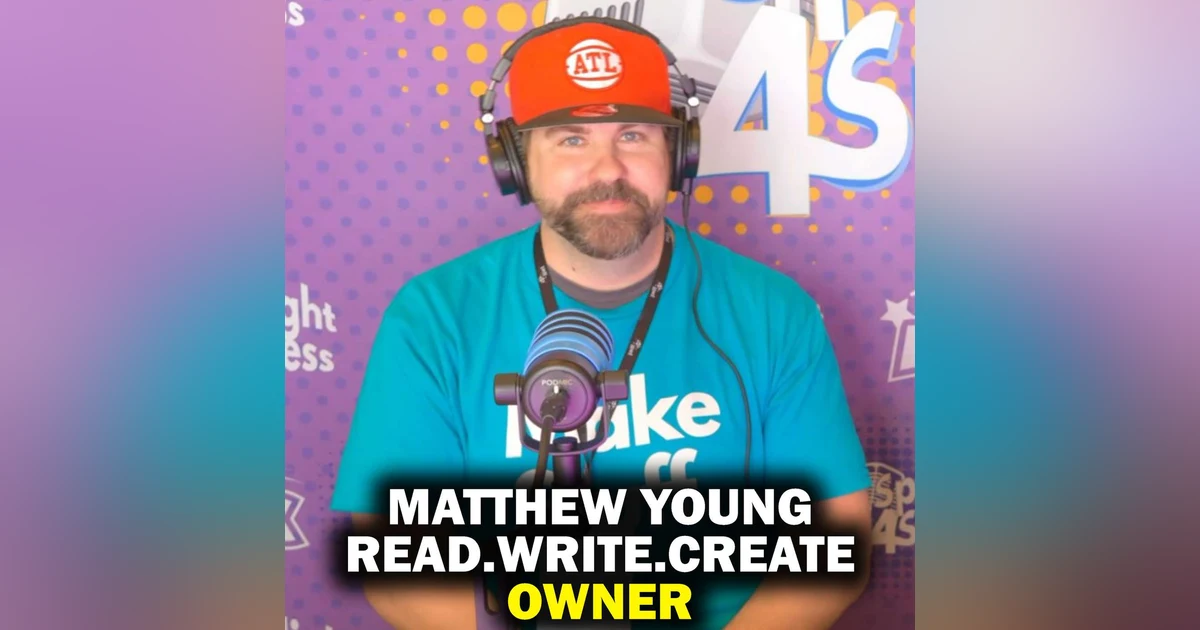
 A lot of kids don’t hate writing, they hate the feeling of being judged while they’re trying to think. From the Summer GALE conference on Jekyll Island, Georgia, we sit down with Matthew from Read Write Create to talk about a more human way to teach creative writing, one that starts with imagination and ends with stronger writing skills.
Website: spotlight4success.com
Welcome From Jekyll Island
SPEAKER_00Welcome to Spotlight for Success with American Book Company. I'm your host, Derek Pentozi, and we're here at the Summer Gale in Jekyll Island, Georgia. Today here we have here our special guest, Matthew, and he's with Read Write Create. So we're so glad to have you on our podcast today.
SPEAKER_01Well, thank you for having me.
SPEAKER_00I appreciate it to be here.
Read Write Create And The Mission
SPEAKER_00So tell us a little bit like why you why you came here to Gale.
SPEAKER_01Well, I'm here with my company. My brother and I have a company called Read Write Create. We are a creative writing company. Our goal is to create products for both the retail space and uh schools and homeschoolers that inspire kids to tell stories, to to teach creative writing, um, and to do it in a way that takes the intimidation out of it. So I don't teach uh mechanics or grammar. Um I leave that for the experts. I just teach kids how to develop ideas in their head and then how do we get those ideas out of our head and onto the paper.
SPEAKER_00That's very interesting. I'm curious, what are a few ways you you use to try to get the ideas out of
A Trilogy For Building Stories
SPEAKER_00their head?
SPEAKER_01Sure. So the first thing I I say so I the particular program that I teach is called my creative writing trilogy. It starts with a character creator, then it goes to World Builder, which is teaching them setting, and then Story Writer, which teaches them a basic story structure. I teach this to kids eight years old up to about 13 to 14 years old. When I sit down with a group of kids, the first thing I say to them is you can write, you can draw,
Story First Not Grammar First
SPEAKER_01you can do a combination of the two. The most important thing for me is that whatever you're comfortable with, I want you to do that. I don't want them to be worried right out of the gate about am I spelling this word right? Am I structuring this sentence right? I want to take that intimidation, that judgment out of it. So I find that when we can start there, it makes an uh it creates an environment that's a lot more free thinking. They feel a lot safer in that environment. And I think if if the way that my my curriculums are structured, it makes it easy for them to start developing those ideas and getting those visions in their head that they can put on the paper.
SPEAKER_00Absolutely. And I I think that's really special because I feel like a lot of times, especially like in elementary schools, you don't really learn those skills too much.
SPEAKER_01Well, yeah, I mean, I can remember, you know, I was never good at spelling, never good at grammar. And I remember growing up thinking that I could not, I wasn't a writer, I couldn't be a writer because I associated storytelling uh so much with your ability to formulate the sentence properly, punctuation, um, proper spelling, and so all these things that really at the end of the day, the only reason we have those things is because we want to communicate the stories that we have. What I tell folks when I do, when I talk to teachers is that uh, you know, the oral traditions, the oral stellar storytelling traditions predate the written language. We develop the written language because we have stuff we want to say. And so somewhere along the way in the education process, we decided that it's the written language first, then you can tell stories.
SPEAKER_00Yeah.
SPEAKER_01Well, I I don't like that because then we're teaching to the test. I like to say that get them excited about the stories they want to tell, then they'll care more about the punctuation, the grammar, because we use those as a tool to communicate our ideas. Exactly. So it motivates them. It gives a why, it gives them a reason why.
SPEAKER_00Yeah. So yeah, personally, that would motivate me a lot more. Yeah. Yeah, I love that idea.
SPEAKER_01Yeah.
SPEAKER_00Yeah, go ahead.
Twins Building Form And Function
SPEAKER_00Yeah, yeah. Tell me, tell me what it's like working with your brother. That's that's very interesting. You tell me what it's like working with your brother.
SPEAKER_01Oh, it's pretty interesting. You know, good days, bad days, good days, bad days. Yeah, yeah. Uh no, it's great. We're twins. So yeah, so we've always worked together. Um and and we're brothers, you know, we have disagreements. We're it we're interesting though because we kind of form two sides of the same coin. I like to say we're form and function. So he's very, he's a designer. He uh all of our products, he does the the branding design, he does the physical design on everything, the visuals of our products he designs. I'm responsible for the function of the product. So I'll come to him with an idea saying, I'm gonna create this, and I'll whether it's our creative writing trilogy, which I wrote and I teach, or we have these little things called story stones, which are these little felt tokens that are writing prompts for early learners. I'll um I'll come to him with an idea and then he will take my really kind of crappy version of the idea, not crappy, but not visually appealing, you know, and then he will put it in a format that's a lot more commercial friendly and digital appealing. So we were form and function, as I like to say.
SPEAKER_00I like that, like how you guys both use your your own gifts you know to kind of formulate this company. Yeah, what about you?
SPEAKER_01What are you guys?
SPEAKER_00What's your um so I I currently work in product development at the business, and David is working as a salescription from Georgia. Oh. So we don't really like work hand in hand too much other other than like conferences, but it's it's pretty cool. It's a family business, so I get to hang out with them a lot. It's pretty cool.
SPEAKER_01I love that.
SPEAKER_00Yeah. I guess we're a family business too. I guess so. Yeah.
Thanks And How To Learn More
SPEAKER_00Well, do you have any last words for the Gale community?
SPEAKER_01Uh no, I mean, I just appreciate everybody here. I appreciate all these principals and administrators. Um, and if they're interested in what I do, I do professional development. Um, and then if they're interested in any of our creative writing products, readwritecreate.org. We got lots of videos and stuff on there that they can watch and check it out.
SPEAKER_00Absolutely. Well, thank you for coming on, Matthew. Well, thank you for having me. I appreciate it. Thanks for tuning in. Peace out.


